

The United States Marine Corps Flag: A Symbol of Valor and Tradition

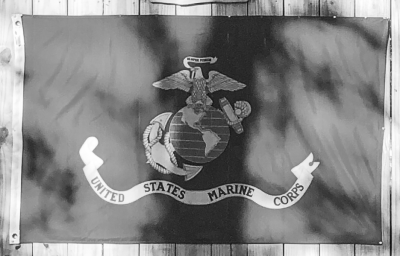
The flag of the United States Marine Corps is more than just a piece of fabric — it’s a powerful emblem of honor, sacrifice, and the enduring legacy of one of America’s most storied military branches. From its origins in the Revolutionary War to its modern-day ceremonial presence, the Marine Corps flag reflects the spirit and history of the Marines.
 Historical Roots
The Marine Corps was established on November 10, 1775, by the Continental Congress, and its earliest flags were likely adaptations of existing American symbols. During the Raid on New Providence in 1776, Marines may have carried the Grand Union Flag, which featured 13 stripes and the British Union Jack, or the Gadsden Flag, with its iconic rattlesnake and the motto “Dont Tread on Me.”
In the 1830s and 1840s, Marines used a white flag with gold fringe, featuring an eagle and anchor and the phrase “To the Shores of Tripoli.” After the Mexican-American War, this was updated to “From the Halls of Montezuma to the Shores of Tripoli,” a line now immortalized in the Marines’ Hymn.
Modern Design and Symbolism
The current Marine Corps flag was officially adopted on January 18, 1939. It features:
- A scarlet field symbolizing courage and sacrifice
- The Eagle, Globe, and Anchor emblem in gray and gold, representing the Marine Corps’ commitment to defending the nation on land, at sea, and in the air.
- A streaming banner beneath the emblem with the words “United States Marine Corps” in scarlet lettering.
The indoor/parade version of the flag is bordered with gold fringe, while the outdoor version is plain. It measures 52 inches by 62 inches and is often adorned with battle streamers and sterling silver bands engraved with the names of conflicts in which Marines have served.
The Marine Corps flag is prominently displayed during military ceremonies, parades, and official functions. It is often seen alongside the American flag, especially in Color Guard formations, where it is dipped in honor during the playing of “The Star-Spangled Banner.” One of the most iconic moments associated with the Marine Corps is the raising of the American flag on Iwo Jima in 1945, a scene that, while featuring the national flag, forever linked the Marines with valor and heroism in the public imagination.
For Marines past and present, the flag is a sacred symbol. It represents not only the battles fought and the lives lost but also the unwavering commitment to duty, honor, and country.
Mentone Fall Festival Returns Saturday, Oct. 17
Lots of Good Food Choices and Opportunities to Sponsor Mentone is preparing to welcome thousands of visitors as the Mentone Fall Festival returns Saturday, Oct. 17, for a full day of art, music, food, and » Read More

High Temps? No Problem. Try These Cool Recipes
We’ve been spoiled most of the summer with rainy days, cloud cover, and highs in the 70s and low 80s. But today when I walked outside, I realized that luck might have run out. Corn » Read More
Valley Head Women’s Club Awards Scholarships
The Valley Head Area Women’s Club awarded two scholarships to the Valley Head High School Class of 2026. This year, the scholarships were increased in memory of JoAnn Phillips to a total value of $800 » Read More

A Bit of Our Town’s History
I decided to give you all a brief history lesson on our beautiful town this month. I even discovered a new fact or two myself. Valley Head was officially incorporated in 1922 and continues to » Read More