

For the Love of Lavender

Like any trek, the inception and realization of Lookout Lavender Farms was a tale of time, hard work, and ultimately great satisfaction. The downtrodden, forgotten property and a snake-infested homestead would have been enough to send most folks running, but the land just kept calling to Alice and Bill Marrin. They enthralled the Rhododendron Garden Club with their adventure of lavender inspiration. Why lavender? Four main reasons: deer resistance, low maintenance, reliable blooming, and fragrance. Alice told of a deer that didn’t know it was supposed to resist the tender silvery green foliage or the spikes of pinky, purply flowers. It took one taste, spit it out, and lesson learned.
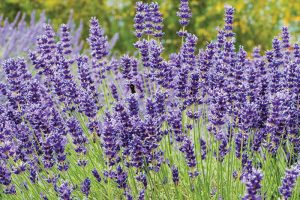 With its Mediterranean origins, lavender needs full sun and alkaline (7.2 pH is ideal) soil that is well drained and sandy. No heavy clay. Since most of the land in this area is acidic, with heavy clay and probably drainage issues, some adaptations must be made. Plants can be placed 40 inches apart on mounds for better drainage and limestone rocks added to the soil to adjust the pH. (test the soil). Once established, lavender requires little water. Bees love it, other insects not so much. Pruning six weeks before the frost date keeps the plant healthy and in shape for spring blooms. Seeds do not germinate well, so cuttings are the best way to propagate lavender. Those who visit the farm can attest to the heady, calming fragrance wafting from rows of purple bliss planted in the four fields.
Their copper essential oil distiller would be the envy of many a moonshiner! Lavender-infused moonshine anyone? Fifty pounds of freshly cut lavender stems will fill the still, and then the process is similar to steaming vegetables. Magic happens, and finally the separator funnel is filled with essential oil floating atop the denser water.
For culinary purposes, the English lavenders, aka True Lavenders, are preferred. Lavandula angustifolia cultivars offer a variety of subtle notes when added to food. For a peppery flavor, try “Melissa.” “Croxton Wild” leaves an earthy, cinnamon taste, while “Miss Katherine” is sweet and floral. If something tastes like soap, the cook is heavy-handed or the wrong lavender variety was used. Just a soupçon is needed! Some lavenders are more tender and won’t survive mountain winters, so choose wisely or plant in containers that can be moved. Augustifolias will produce a sweeter, more subtle smell than the Lavandin cultivars. French lavender plants (Lavandula x intermedius), aka Lavandin aka the common lavender, are sterile hybrid crosses between French and Portuguese plants. Containing high amounts of aromatic oils and a higher camphor content than the English lavender makes it ideal for cosmetic purposes. It has a stronger, sharper scent. The smell associated most with lavender is produced by the Grosso variety.
Lavadins tend to be larger plants with more flowers that bloom once a year. Hues of its spiked flowers of lilac purple to violet blue. Foliage is grayish green. Lookout Lavender does not grow Spanish lavender (Lavandula stoechas). What seems like such a good buy at Trader Joe’s is an annual here, one and done. It may be more suitable for areas of hot, humid climates.
Medicinally, lavender essential oil has antibacterial, anti-fungal, antioxidant, and anti-inflammatory benefits. Studies have shown it to relieve headaches, reduce stress, and improve sleep and insomnia. One article showed it equal to Valium for anxiety! It’s not just a pretty face!
Lookout Lavender Farm will be open June 6-21 for its annual Lavender uPick Event: Tuesday, Wednesday, Thursday, and Saturday from 10 a.m.-4 p.m.; Friday 4-8 p.m. Admission is $8; free for 12 and under. Each harvested bundle is $7. Bring a picnic. Spend the day. Take photos. The Lav Shack offers all sorts of lavender goodies — essential oil, butters, soaps, jellies, infused pillows. For digging, cutting and weeding the Hori Hori Barebones Ultimate knife may be the most envy-inspiring tool a gardener can have!
The next garden club meeting at the library will be Tuesday, March 11, at 10 a.m.
Featured speaker will be the fabulous, knowledgeable Martha Wood. Salvia will be the topic of discussion.
Mentone Fall Festival Returns Saturday, Oct. 17
Lots of Good Food Choices and Opportunities to Sponsor Mentone is preparing to welcome thousands of visitors as the Mentone Fall Festival returns Saturday, Oct. 17, for a full day of art, music, food, and » Read More

High Temps? No Problem. Try These Cool Recipes
We’ve been spoiled most of the summer with rainy days, cloud cover, and highs in the 70s and low 80s. But today when I walked outside, I realized that luck might have run out. Corn » Read More

Valley Head Women’s Club Awards Scholarships
The Valley Head Area Women’s Club awarded two scholarships to the Valley Head High School Class of 2026. This year, the scholarships were increased in memory of JoAnn Phillips to a total value of $800 » Read More

A Bit of Our Town’s History
I decided to give you all a brief history lesson on our beautiful town this month. I even discovered a new fact or two myself. Valley Head was officially incorporated in 1922 and continues to » Read More