

Rhododendron Garden Club Takes On Invasive Species

To mark the beginning of a new chapter in our club’s efforts to preserve and enhance the natural beauty of our surroundings, we recognized and supported National Invasive Species Awareness week, February 24-28.
With posts on Facebook and a call-out to community members to join us at Moon Lake Village, we set out to conquer the invasive plants that have spread like wildfire across the newly established RGC garden. Many thanks to the small but mighty crew who gathered to battle a whole lot of Chinese privet, honeysuckle vines, vinca, arum, wire vine, multiflora, and more.
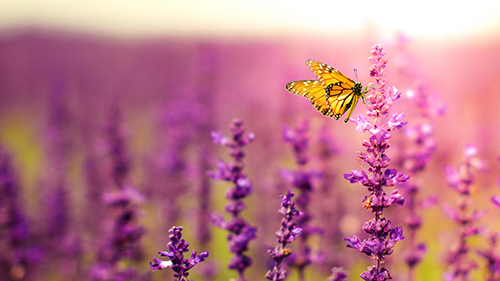
Pollinators like this butterfly need support from conscious, intentional garden planning.
As gardeners, we often prioritize aesthetics, fragrance, and growth potential when selecting plants for our gardens. However, it’s crucial to consider the environmental impact of our choices. One of the most pressing issues in horticulture today is the prevalence of invasive plant species and the vital importance of nurturing native plants instead.
Invasive plants are non-native species that have been introduced to an area, either intentionally or accidentally, and have established themselves at the expense of native flora. These plants often have aggressive growth habits, outcompeting native species for resources such as sunlight, water, and nutrients. The result can be a significant loss of biodiversity and disruption to local ecosystems.
Choosing native plants for your garden has numerous benefits, both for the environment and for the gardener. In this spirit, member Martha Wood presented a program on salvia during our last meeting, held on March 11 at the Moon Lake Library.
Salvia plants belong to the mint family, Lamiaceae, and are characterized by their aromatic leaves and tubular flowers. They thrive in diverse environments, making them suitable for a variety of gardens—from sunny borders to shaded woodland areas. Their blooming period can range from late spring to late fall, depending on the species and regional climate. This extended bloom time means that salvia can provide color and charm for most of the gardening season.
Salvia comes in a wide variety of species, each with a unique color palette and growth habit. Among the most popular types are:
Salvia nemorosa (Woodland Sage): Known for its striking purple-blue flowers, this species blooms from late spring to early summer and is a favorite for border plantings.
Salvia splendens (Scarlet Sage): True to its name, this species boasts bright red blooms that can add a fiery touch to any garden. It flowers profusely from summer to fall.
Salvia greggii (Autumn Sage): This species offers a variety of colors, including red, pink, orange, and purple, and is known for its long blooming season, often extending into the late fall.
Salvia farinacea (Mealycup Sage): With its tall spikes of deep blue or white flowers, this salvia is perfect for adding vertical interest to garden beds. It typically blooms from late spring to frost.
Salvia officinalis (Common Sage): While often grown for its culinary uses, the common sage also produces lovely purple-blue flowers that can enhance the visual appeal of herb gardens.
These diverse species, with their array of colors and blooming periods, make salvia a versatile and valuable addition to any garden. Another advantage of growing salvia is its ability to attract pollinators. These plants are particularly popular among bees, butterflies, and hummingbirds, which are drawn to their vibrant flowers and rich nectar. By planting salvia in your garden, you can create a haven for these essential pollinators, promoting biodiversity and supporting the health of your local ecosystem. Its presence helps to ensure the pollination of other plants in your garden, leading to a more abundant and thriving environment.
Transitioning to native plants doesn’t mean sacrificing beauty or variety. Start by researching which native plants flourish in your region and consider visiting local nurseries that specialize in native plant species. They can help you select the right plants for your garden!
By Rhea Pirch
Rhea Pirch is president of the Rhododendron Garden Club.
Annual Wildflower Trail Walk
On April 8, we’ll make the annual trek to the Shirley Miller Wildflower Trail/The Pocket/Pigeon Mountain. Meet at the MERF House at 9 a.m. for the adventure. All are welcome, and the boardwalk trail is easily accessible for those who aren’t mountain climbers!
Join us!
The RGC meets each month on the second Tuesday. We are currently meeting in the Moon Lake Library and gather at 10 a.m. Please join us for connection and conviviality. RGC is a member of the National Garden Club, Deep South, Garden Club of AL, District ll, and NE AL Federation of Garden Clubs.
Mentone Fall Festival Returns Saturday, Oct. 17
Lots of Good Food Choices and Opportunities to Sponsor Mentone is preparing to welcome thousands of visitors as the Mentone Fall Festival returns Saturday, Oct. 17, for a full day of art, music, food, and » Read More

High Temps? No Problem. Try These Cool Recipes
We’ve been spoiled most of the summer with rainy days, cloud cover, and highs in the 70s and low 80s. But today when I walked outside, I realized that luck might have run out. Corn » Read More

Valley Head Women’s Club Awards Scholarships
The Valley Head Area Women’s Club awarded two scholarships to the Valley Head High School Class of 2026. This year, the scholarships were increased in memory of JoAnn Phillips to a total value of $800 » Read More
A Bit of Our Town’s History
I decided to give you all a brief history lesson on our beautiful town this month. I even discovered a new fact or two myself. Valley Head was officially incorporated in 1922 and continues to » Read More