

Coming Home to the Canyon
Little River Canyon Center’s T.C. McLemore
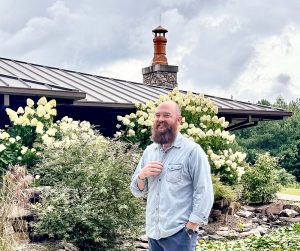 Growing up in Fort Payne, T.C. McLemore spent plenty of time around Little River Canyon. But he wasn’t there to hike.
“I didn’t know you could be outside in the woods without a tree stand or a bag of decoys until I got to college,” he said. His father took him hunting and fishing, often in the wildlife management area surrounding the canyon.
“That was my interaction with the canyon growing up,” McLemore said. “We’d go to the overlook once a year, but otherwise we’d be in the backcountry.” Today, that same boy who once wandered these woods in search of game is responsible for helping others discover the canyon for recreation, education, and conservation.
As director of Jacksonville State University’s Little River Canyon Center, McLemore oversees strategic planning, public programming, and partnerships. He follows in the big footsteps of the center’s founding director, Pete Conroy, who retired in September 2025. Nearly a year into the role, he says it feels less like a career change than the culmination of everything that came before. “It felt like the confluence of a lot of things I’d worked on … this is the job that I’ve been preparing for.”
McLemore earned a political science degree from UAB followed by a master’s degree in history. During his years at UAB, he discovered a passion for hiking through the university’s outdoor pursuits program. His first big backpacking trip was to the Grand Canyon. After that, he joked to himself, “I have to do this all the time.” The UAB program took him on many outdoor adventures. He even met his wife Natalie during a kayaking class. During grad school, he backpacked 1,000 miles along the Pacific Crest Trail.
He has approached his work life with as much curiosity and enthusiasm as he has the outdoors. His career has included AmeriCorps service, nonprofit leadership with Alabama Possible and the Alabama Humanities Alliance, executive leadership at Red Mountain Park, consulting work, and eventually serving as Alabama’s first executive director of outdoor recreation through Innovate Alabama. Throughout those roles, he led community education initiatives, marketing campaigns, and partnerships that connected conservation with economic development.
An Integrated Vision
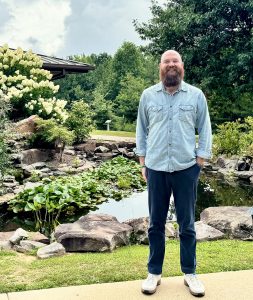 He holds a similar vision for the canyon center. While making sure the grounds around the center maintain their beauty and function through efforts such as a planned native plant installation, one of his biggest priorities is helping people see Little River Canyon as more than a scenic destination. He believes it is one of northeast Alabama’s greatest quality-of-life assets — one that can help communities attract families, professionals, and employers.
That idea came from his years leading Red Mountain Park in Birmingham. “We would have recruiters looking for hospital staff or department chairs for UAB,” he said. “They would do a quality-of-life tour with a family… and that would usually involve a tour of Red Mountain Park.”
McLemore believes the center can play the same role for DeKalb County. “If you’re recruiting from out of region,” he said, “if folks are wondering, ‘I can work here, but can my family live here?’ Of course they’re going to go by the schools… they’re going to go out to eat somewhere, but I hope that we’re part of that experience here — that they understand that this is here for them every day, and you can integrate it into everyday life.”
He’s already shared that idea with local economic development leaders, encouraging them to include the canyon center when recruiting prospective employees, whether they’re physicians, manufacturers, or other professionals considering a move to the area. For McLemore, protecting natural spaces and growing local communities are not competing goals. They’re complementary.
Much of his first year on the job has been spent learning before making changes. “I wanted to know what I didn’t know,” he said. “I still don’t know what I don’t know.” Instead of reinventing existing programs, he’s focused on supporting the center’s experienced staff while looking ahead to longer-term planning. “I’ve inherited a lot of great programs,” he said, noting the field school education staff that handles field trips, day camps, nature outreach programs at schools and libraries, as well as the musical performances and other events throughout the year. “We also have a lot of folks from the main JSU campus who have spent a lot of time shaping the programming at this place.”
One of the most enjoyable parts of his role is interacting with the staff at Jacksonville State. “I’ve really enjoyed everyone I’ve gotten a chance to work with. Everybody is so helpful and so nice and so welcoming and excited about the center. “ And when it comes to programming, he said, “I want to make sure that we are known and made available to folks on campus, that we find new and creative ways to bring those experts and scholars up here.”
“The Prettiest 20 Minutes of Your Day”
Looking ahead, the director hopes even more local residents will begin to think of the canyon as part of their everyday lives — not as a special trip, but as a nearby resource. “If I’m sharing anything with the readers here,” he said, “it’s that we’re not far away.” He believes that’s especially true for neighboring communities like Mentone. “There’s no traffic. If you’re visiting from a city and you see it’s going to take 20 minutes to get from Mentone to the Canyon Center, it’s going to be the prettiest 20 minutes of your day.”
Outside the office, McLemore still makes time to experience the canyon the way he hopes others will. On weekends, he often brings his wife and 6-year-old daughter to explore the preserve. “I try to keep larger excursions for personal reasons — to remind myself that I enjoy this place and it’s not just work,” he said. His daughter already considers the canyon center her favorite place to visit with her father, peppering the education staff with questions and making herself at home among the exhibits.
For McLemore, returning home has been a chance to steward a place that shaped his childhood; introduce a new generation, including his own daughter, to its wonders; and help others see Little River Canyon not simply as a destination worth visiting, but as an essential part of living well in Northeast Alabama.
To learn more about Little River Canyon Center, its offerings, and the Little River Canyon National Preserve, visit www.jsu.edu/epic/canyoncenter/.
4322 Little River Trail NE
Fort Payne, AL 35967
Front Desk: 256-845-3548
Gift Shop: 256-845-7213
Hours: Open Tuesday–Sunday:
10 a.m. – 4 p.m.

Medicare Open Enrollment for 2027 Is Here
Medicare Open Enrollment is upon us again. Every year from October 15 to December 7, Medicare beneficiaries have the opportunity to make changes to their Medicare Part D Prescription Drug plan or » Read More
DeSoto State Park: Something for Everyone in October
October is packed with opportunities to explore, learn, and enjoy the outdoors at DeSoto State Park. From guided hikes and campfire talks to creative workshops and Halloween fun, there’s something for nearly every age and » Read More

Get Your Fair Food Fix
Who doesn’t succumb to the heady aroma of fair and festival food? When faced with a decision between a Ferris wheel and fried batter of some sort … well, the decision is pretty easy for » Read More

Holiday Season Is Just Around the Corner
The holiday season is quickly approaching, and we hope you will join us for the numerous activities we have planned. Our annual Trunk or Treat will be Saturday, Oct. 24, in conjunction with Hot Rods » Read More