

Mentone Centenarian Reflects on Longevity, Unusual Wartime Work
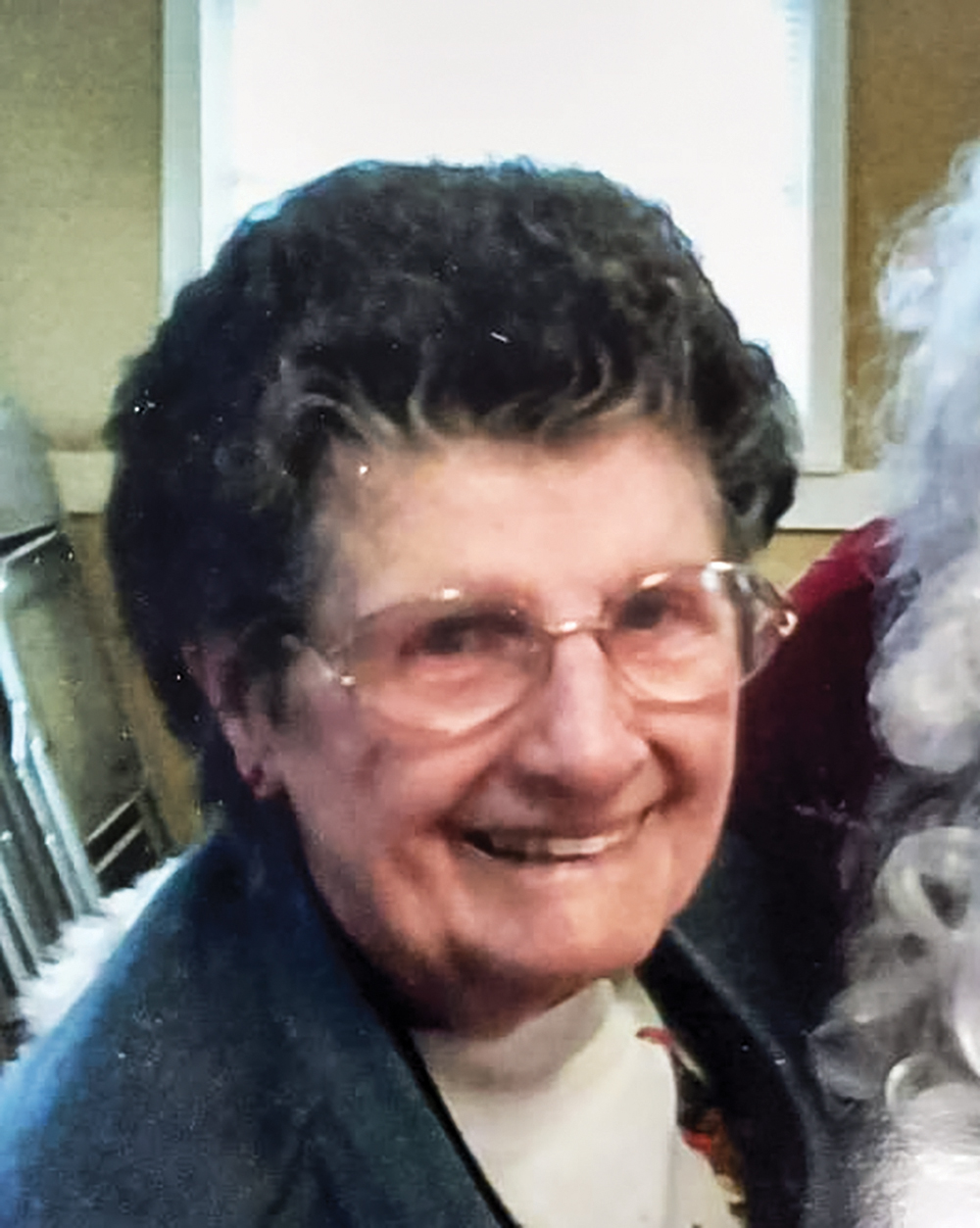
One of Mentone’s residents is in a rarified group. Helen Coutu turned 100 last September (“It was just a day,” she says dryly). Not only is she sharp as a tack, but she doesn’t look her age. Her skin is smooth and rosy, and her short, stylish hair is kept swept back by a headband.
She says she feels more like 65 years old. And, while having a conversation with her, one could imagine her being that age, though she doesn’t get around as easily as she once did and she uses a walker.
Having lived in her house on East River Road since 2013, Helen is known by many from her participation in the MERF Senior Lunch program, which she enjoyed for many years. Her son, Armand Jr., lives here, and her two daughters Diana and Donna live in other states.
Her life has been eventful in many ways others’ have — raising children, marrying a man in the military and moving many times around the country — but she experienced a unique episode in life that few people know about. During World War II, she was what is referred to as a Radium Girl, a factory worker who painted watch and clock dials with the hazardous substance. The wartime occupation that caused illness and death among some in this group of women is the subject of books, film, and theater.
Helen grew up in Waltham, Massachusetts.
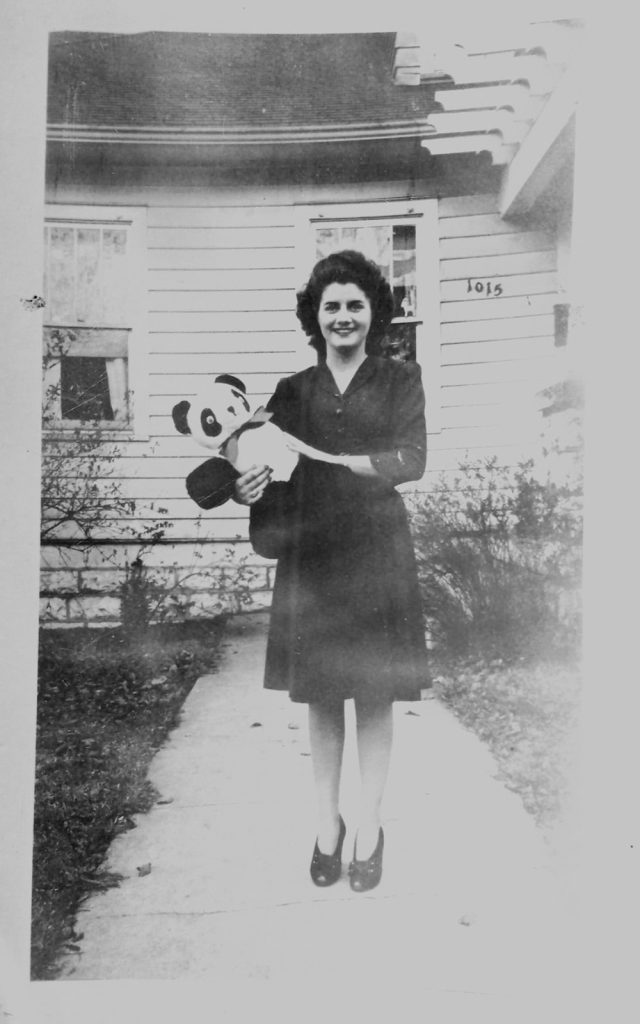
Helen Coutu, circa 1940
“My hometown was 12 to 15 miles from Boston Harbor, so there were things we couldn’t do during World War II. A lot of people didn’t know what was going on. They read what was in the newspaper and what came over the radio, that was it. No TV. But I think they would have been shocked if they’d known there were German U-boats in Boston Harbor.”
The radio news asked that local residents keep their windows covered at night and keep car headlights off to obscure the city from enemy eyes. Like many others around the country at the time, Helen’s family did what they could to contribute to the war effort, such as saving recyclable materials like tin cans and newspapers, which were then used to produce military equipment.
“I was still in high school when the war started. I graduated in ’42, and when I look back, you wanted to get out and do something for the war effort,” she said. “I had a hard time getting a job, because I wasn’t old enough. You had to be 18 to do any war work. I finally did get a job in the watch factory. I gauged jewels [measured their thickness]. My mother worked in the watch factory. I heard through the watch factory that they had women who painted with radium. I just asked my boss if I could get into that. He said sure, but first you have to show me that you can paint inside the lines,” she said. “They did painting with radium during WWI, and they didn’t know how dangerous radium was. Women painted their lips with radium, so when you smiled, you were pretty … but they got smarter during WWII.”
Helen began the job of painting clock dials, which lasted eight months. By the second world war, those who worked with radium sharpened the tips of their paintbrushes not with their lips, as had previously been the case, but by dipping their brushes into paint thinner in order to reduce contact with radium dust.
“We had what they called the radium room. It was just one big room, but every girl had her own cubicle. We learned not to point [sharpen] your paintbrush with your mouth.”
MIT in Boston monitored the women every three months, Helen said, to check their radium levels. She once had to leave work for two weeks due to her elevated level of radium. For a time afterward, a supervisor stood behind her to observe her work and determined that she was wiping her face and spreading the radium on her skin.
During the workday, she explained, if an employee needed to take a break or use the restroom, they passed through what was called a black room, where ultraviolet light could detect radium.
“If you glowed, you washed your hands in paint thinner.”
She was not afraid of the job, she said. It was a way to help during the war.
Son Armand Jr. says that he knew as a child of the work his mother had done during the war.
“I was aware of it, because MIT used to monitor her and the other technicians years after the work,” he says. “Women used to wear eyeshadow and lipstick with radium in it. They learned later that it wasn’t such a good idea.”
Helen was married to Armand Coutu, of French Canadian descent, in 1943. Armand was training in the Air Force, so they moved around a bit, as military couples do — first to Riverside, California, then to Albuquerque, and later a handful of other cities and towns.
“That’s what we girls did, when they shipped your husband, there you went,” she said.
In fact, they moved many times due to Armand’s work. She took the big geographical shifts in stride. She had to focus on raising her children, but she always valued the people she met along the way, she says, as part of the fabric of her story.
The couple eventually separated. Armand Jr., who was living in Mentone, suggested his mother move to Mentone.
“I had been up here once. I thought it was a beautiful spot.”
Reaching the century mark has taken her quite by surprise. She credits her longevity to sensible eating.
“I never knew I was going to hit 100. Nobody in my family ever hit that age. Sometimes I think maybe it was the era I was brought up in. It was during the Depression. There wasn’t McDonald’s, there wasn’t Coke. It seems everything we had to eat was fresh. I think maybe it has to do with what I ate.”
Helen’s grandparents worked at a farm with orchards and dairy cattle. Her family ate vegetables and fresh fruits.
“I’m at an age where I could eat anything I want. But I still try to watch what I eat.”
She talked about life and her future in a pragmatic way. She feels as though she has grown wiser over the years, matter-of-factly saying she isn’t smarter, but perhaps able to navigate whatever life brings.
“I’ve asked the Lord, why me? Why am I still alive? Well, people say He still has something for you to do.”
“I tell all the nurses who come in: life is like a roller-coaster. It’s up and down. I tell them, one thing they need to do is stay in touch with their mothers. Visit them. Even if you don’t get along … try.”
She advises the same for any fellow human being: If you are at odds with someone, go to them and make amends if you can.
Most important to her is the ability to remain able to remember her children growing up and reflect on what they have done as adults. She doesn’t want to lose any more independence, but she is resigned to the need to leave her home.
Since this interview, Helen moved to an assisted living facility in Gadsden. She made a point of taking the photo of her favorite dog that passed away a while back. She is doing well and receiving good care, according to her son, Armand Jr.

Medicare Open Enrollment for 2027 Is Here
Medicare Open Enrollment is upon us again. Every year from October 15 to December 7, Medicare beneficiaries have the opportunity to make changes to their Medicare Part D Prescription Drug plan or » Read More
DeSoto State Park: Something for Everyone in October
October is packed with opportunities to explore, learn, and enjoy the outdoors at DeSoto State Park. From guided hikes and campfire talks to creative workshops and Halloween fun, there’s something for nearly every age and » Read More

Get Your Fair Food Fix
Who doesn’t succumb to the heady aroma of fair and festival food? When faced with a decision between a Ferris wheel and fried batter of some sort … well, the decision is pretty easy for » Read More

Holiday Season Is Just Around the Corner
The holiday season is quickly approaching, and we hope you will join us for the numerous activities we have planned. Our annual Trunk or Treat will be Saturday, Oct. 24, in conjunction with Hot Rods » Read More